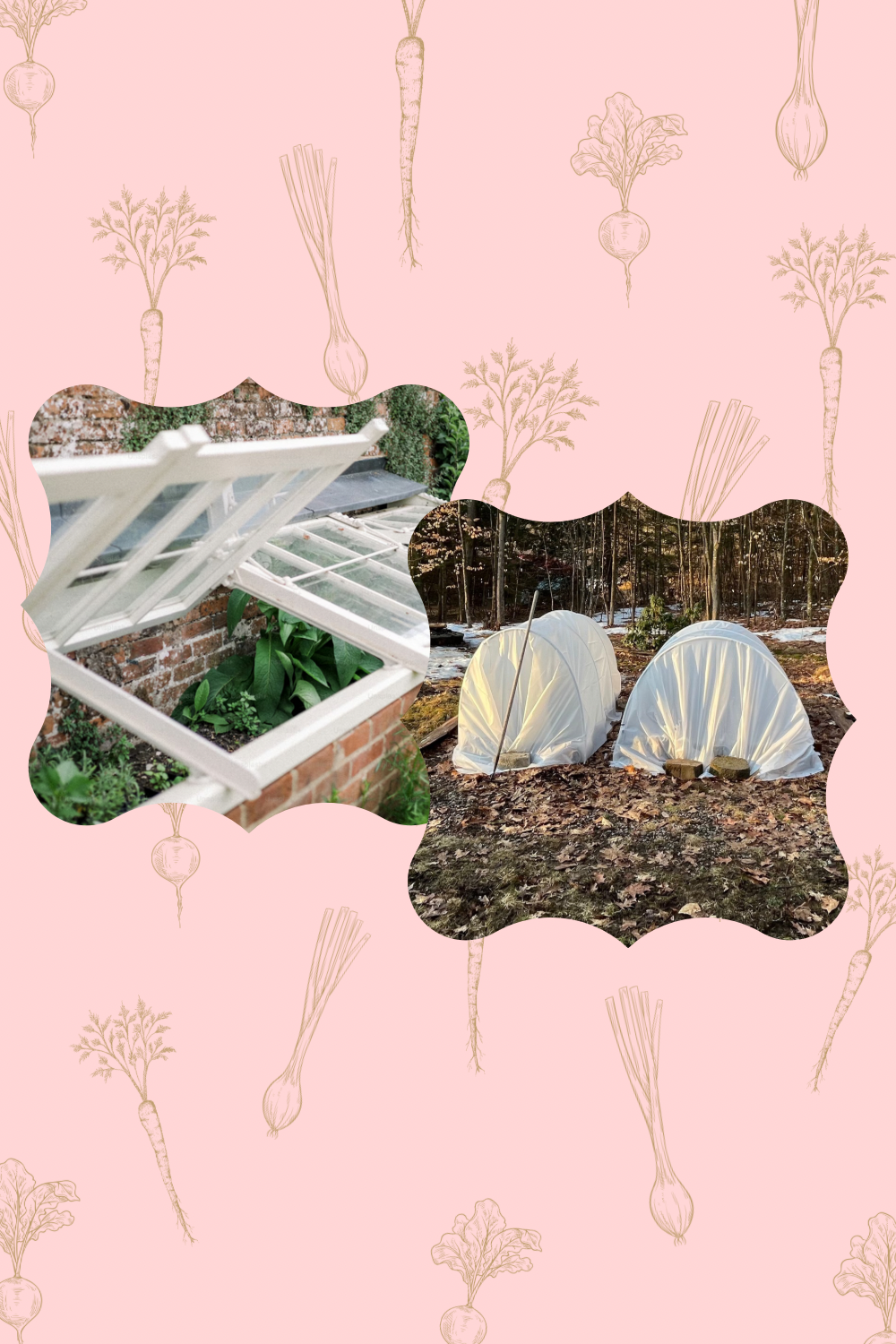
If you’re ready to extend your growing season but don’t want a full greenhouse, you’ve probably come across two popular options: cold frames and hoop tunnels 🌱
Both help protect plants from frost and give you a head start in spring, but they work a little differently.
Here’s how to decide which one is right for your garden.
🌿 What Is a Cold Frame?

Photo: Annie Spratt
A cold frame is a low box with a clear lid placed over part of your garden bed. You can buy ready made kits or DIY them out of old windows.
Think of it as a mini greenhouse for each garden bed. Cold frames are typically made using glass or green house polycarbonate which traps heat better than just green house plastic.
Best for:
- Small garden spaces
- Hardening off seedlings
- Growing leafy greens
- Gardeners who want a contained setup
- Gardeners who want to start/ transplant cool weather loving crops earlier
Want more info on how to build a cold frame or what to grow in one?
📖 Read
🌱 What Is a Hoop Tunnel?

A hoop tunnel (also called a low tunnel) is made with curved hoops covered in plastic or garden fabric over a row of crops. There are 3 main types of hoop tunnels you’ll see
1. Made with pvc pipe (or another flexible pipe-like material and attached to raised or framed garden beds with green house plastic draped over and secured to the framing of the raised bed or garden box.
2. Made with flexible metal rods that stake into the ground with green house plastic draped over them and using rocks or 2x4s to keep it from blowing away.
3. A kit hoop tunnel made with aluminum framing, these are usually large enough to walk in and are secured to the ground using cinder blocks or stakes. (These can range in size from 6 feet long to 30+ like you see at nurseries)
A hoop tunnel creates a small (or large) tunnel over your plants.
Best for:
- Longer garden rows/ larger areas of a garden
- Raised beds
- Covering multiple plants at once
- Flexible setups (they can easily be removed when danger of frost has past)
Not sure what to grow in a Hoop Tunnel or how to build one?
📖 Read

🪟 Cold Frames: Pros & Cons
✅ Pros
- Very beginner-friendly
- Easy to manage
- Great for small areas
- Excellent for hardening off seedlings
❌ Cons
- Covers limited space
- Can overheat quickly on sunny days
- Less flexible for larger gardens
Ready for a Cold Frame?
🌿 Hoop Tunnels: Pros & Cons
✅ Pros
- Covers more space
- Affordable and scalable
- Easy to install over rows
- Great for protecting transplants
- Great for over wintering
❌ Cons
- Requires securing against wind
- Plastic may need replacing over time
- Slightly more setup + hardware involved
Wanna try Hoop Tunnels?
🌡 Which One Is Warmer?
Cold frames often retain heat slightly better because they’re enclosed. If made with glass windows they can also hold heat slightly longer.
Hoop tunnels still provide strong frost protection but allow more airflow depending on materials used.
Both can increase temperatures a few degrees, which is often all you need.
🌱 So… Which Should You Choose?
Choose a cold frame if:
- You garden in small spaces
- You want something structured
- You’re mainly hardening off seedlings
- You want to start cool weather crops earlier, or over winter cool weather loving vegetables ( depending on climate).
Choose a hoop tunnel if:
- You have longer beds
- You want flexibility
- You want to protect multiple crops at once
- You want to transplant warm weather living crops a little before your last frost date.
Many gardeners eventually use both for different purposes.
🌿 Beginner Tip
Start small.
You don’t need to cover your entire garden at once. Even protecting one bed can give you earlier harvests and more confidence. Starting with one or two can help you learn what works in your climate, with sun availability, and crop variety.
🌿 Final Thoughts
Cold frames and hoop tunnels are simple tools that make a big difference in early spring and late fall. Neither is “better”, it depends entirely on your space and goals.
If you’re curious about building your own, the next post will walk you through how to make both even as a beginner.
About the Author

Hi, I’m Natasha, the person behind The Rooted Grower.
I’m a gardener in progress, a plant parent, and a builder of tools to make gardening easier for beginners, like myself.
I created The Rooted Grower because I wanted a space where learning to garden feels supportive instead of intimidating. I’m learning alongside you, sharing what works, what doesn’t, and what I wish I had known sooner. My goal is to turn confusing moments into “oh, that makes sense” moments and to help you feel confident enough to keep going.
Last updated: [March 19th, 2026]
Leave a Reply