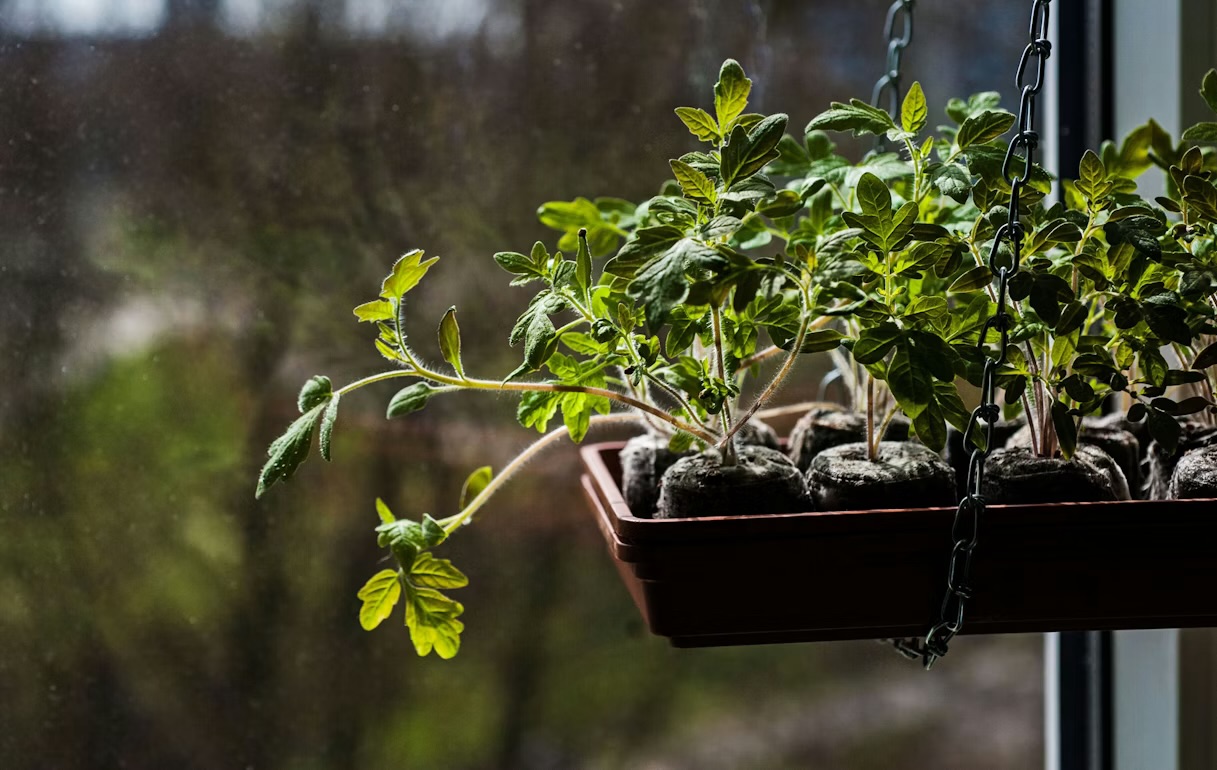
One of the most common problems beginner gardeners experience when starting seeds indoors is leggy seedlings.
Instead of growing short and sturdy, the seedlings become:
• tall
• thin
• stretched
• weak or floppy

Leggy seedlings often fall over or struggle to grow into strong plants later in the garden.
The good news is that leggy seedlings are usually easy to prevent and sometimes even fix.
Let’s look at why this happens and what you can do about it.
What Does “Leggy” Mean?
A leggy seedling is a plant that grows too tall and thin too quickly while searching for more light.
Instead of developing a thick stem and compact growth, the plant stretches upward trying to reach a stronger light source.
This results in:
🌱 long fragile stems
🌱 widely spaced leaves
🌱 seedlings that lean or fall over

The Most Common Cause: Not Enough Light
The number one reason seedlings become leggy is insufficient light.
Even a bright windowsill usually doesn’t provide enough consistent light for strong seedling growth.
When seedlings don’t receive enough light, they stretch upward trying to find more.
This is why many gardeners use grow lights when starting seeds indoors.
If you’re wondering whether grow lights are necessary, our guide on Do Seedlings Need Grow Lights? explains when they help most.

Photo: Jen Theodore
Grow Lights Are Often the Best Solution
Grow lights provide the consistent, direct light seedlings need to grow compact and strong.
For best results:
• place lights 2–3 inches above seedlings
• provide 12–16 hours of light per day
• raise the light as seedlings grow
Keeping lights close to the plants prevents them from stretching.
Considering grow lights? Try our faves
Another Cause: Too Much Warmth
Warm soil helps seeds germinate, but after germination, excessive warmth can encourage rapid stretching.
Seedlings grow best when temperatures are slightly cooler after they sprout.
If you’re using a heat mat, it’s often helpful to remove it once seedlings emerge.
Our guide on Do Seedlings Need a Heat Mat? explains when heat mats are useful.
Crowded Seedlings
When too many seedlings grow in a small space, they compete for light.
This competition causes plants to stretch upward as they try to outgrow neighboring seedlings.
To prevent this:
• thin crowded seedlings
• give each plant enough space
• rotate trays regularly so all plants receive light evenly
How to Fix Leggy Seedlings
If your seedlings are already a little leggy, don’t panic.
There are a few ways to help strengthen them.
Move Lights Closer
Lowering your grow lights can immediately improve seedling growth.
Lights should remain just a few inches above the tops of the plants.
Increase Light Exposure
Seedlings benefit from 12–16 hours of light daily.
Using a timer can make this easy and consistent.
Provide Gentle Air Movement
A small fan can help strengthen seedling stems.
The gentle movement mimics outdoor wind and encourages thicker, stronger stems.
Transplant Deeper (For Some Plants)
Some plants, especially tomatoes, can be planted deeper when transplanted.
This allows them to develop new roots along the buried stem.
Not all plants tolerate this, but it works very well for tomatoes.
Preventing Leggy Seedlings
The best way to avoid leggy seedlings is to set up the right environment from the start.
Healthy seedlings need:
☀ strong light
🌡 moderate temperatures
💧 consistent moisture
🌬 good air circulation
With these conditions, seedlings grow compact and strong.

Photo: Siora photography
Final Thoughts
Leggy seedlings are a very common challenge when starting seeds indoors, especially for beginner gardeners.
Fortunately, the problem is usually easy to fix with better lighting and proper spacing.
With the right setup, your seedlings can grow sturdy stems and develop into healthy plants ready for the garden.
Up Next
If you’re starting seeds indoors, these guides can help you grow strong, healthy plants:
• How to Start Seeds Indoors (Step-by-Step Guide)
• Best Soil for Seed Starting
• How to Transplant Seedlings Successfully
As an Amazon Associate, we earn from qualifying purchases. Prices shown are approximate and may vary.
About the Author

Hi, I’m Natasha, the person behind The Rooted Grower.
I’m a gardener in progress, a plant parent, and a builder of tools to make gardening easier for beginners, like myself.
I created The Rooted Grower because I wanted a space where learning to garden feels supportive instead of intimidating. I’m learning alongside you, sharing what works, what doesn’t, and what I wish I had known sooner. My goal is to turn confusing moments into “oh, that makes sense” moments and to help you feel confident enough to keep going.
Last updated: [March 17th, 2026]
Leave a Reply